PUPPY
TRAINING
TRAINING
REACTIVE
DOG TRAINING
DOG TRAINING
BEHAVIOUR
PROBLEMS
PROBLEMS
OBEDIENCE
CLASSES
CLASSES

The Dog Guru’s Top Tips
Crate Training – A Sanctuary for Calmness and Toilet Training
When introduced with patience and kindness, a crate becomes so much more than a training tool—it becomes your puppy’s sanctuary. A place where they can curl up, exhale, and know the world is safe. Think of it as their cot, their private retreat where rest, calmness, and security are always waiting. But beyond being a den of comfort, the crate is also one of the most powerful and gentle ways to guide your puppy through toilet training with clarity and love.
Puppies are born with the den instinct—an inherited need for an enclosed, protective space. By offering a crate, you honour this instinct. It becomes the place they go to rest, to dream, to feel safe. And because puppies naturally avoid soiling where they sleep, the crate also gently strengthens their understanding of where it’s right to go to the toilet.
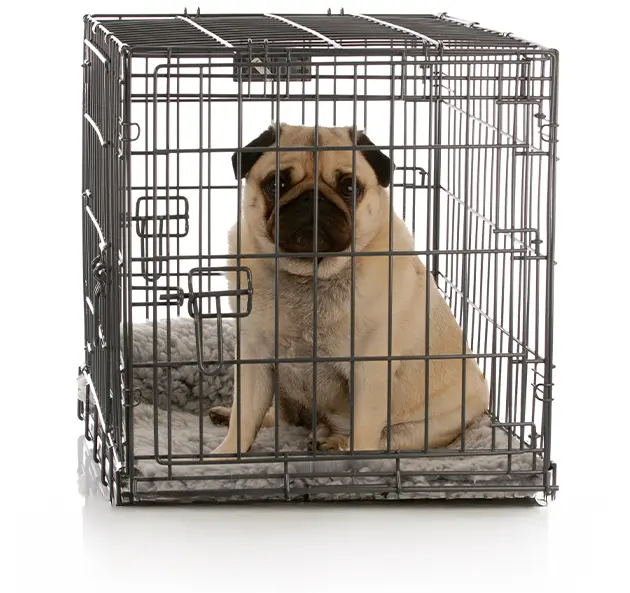
Crates usually come in durable plastic or wire mesh, but what matters most is that it feels like a true den. It should be snug but not cramped—large enough for your puppy to stand, turn around, and lie down comfortably, yet small enough to feel enclosed and safe. If the crate is too big, your puppy may use one corner as a toilet, so a divider can help in the early months.
Place the crate in a quiet, homely space—not the busiest room in your home—your puppy like a baby needs to be able to go into a deep sleep and rest peacefully.
Patience is everything. For your puppy, this must always feel like love:
* Line the crate with a cosy blanket and a safe toy.
* Gently encourage them to step inside the crate, using the cue “Bed” or “Kennel”. Praise softly when they step in.
* At first, close the door without locking it. Build up slowly, locking it for only seconds before opening again.
* When letting them out, stay calm—no fuss, no high energy praise. Calm in, calm out.
If your puppy whimpers, wait until they are still before opening the door. This teaches the gentle truth: calmness, not noise, leads to freedom.
Preventing Separation Anxiety
By weaving the crate into everyday life—while you are home and when you leave—you prevent your puppy from linking the crate with absence or loneliness. Instead, they learn it is always a safe haven, a place of rest and peace. This sense of security is the foundation of confidence and independence, both in toilet training and beyond.
Crate training is the most effective and loving way to guide a puppy towards housebreaking success. Unlike puppy pads or newspapers, which encourage confusion and indoor accidents, the crate provides clarity, routine, and consistency.
* Take your puppy outside immediately after waking, after meals, after play, and before bedtime.
* Use a calm cue, like “Be Clean” or “Toilet”, and stay with them until they go.
* Celebrate success with gentle praise and affection.
* If mistakes happen indoors, stay calm—never punish. Guide them back to routine, remembering that Calmness Leads to Reward ©.
In time, your puppy learns that the world outside is the place to toilet, and your calm leadership is their guide.
Daily Rhythms for Toilet Training Success
* Nap time – Puppies grow through sleep. Use the crate for naps and always take them straight outside when they wake.
* Meal times – Feed on a schedule and take them out immediately after eating to reinforce the connection.
* Two-hour rhythm – During the day, puppies should not be crated longer than two hours without a toilet break.
* Night-time routine – In the early weeks, set an alarm to take your puppy out during the night. This prevents accidents and strengthens the habit of toileting outdoors.
* Consistency builds clarity – The more regular your rhythm, the faster your puppy learns.
Golden Rules – Toilet Training with Soul
* Never use the crate as punishment—it must always be safe and positive.
* Be patient—accidents are part of the learning process.
* Praise every success outdoors with warmth and joy.
* Forgive every mistake indoors and gently guide back to routine.
* Above all, remember Calmness Leads to Reward.
Growing Beyond the Crate
Most puppies benefit from crate training until around 10–12 months, by which time toilet training is complete and chewing phases have passed. Some dogs continue to love their crate into adulthood, using it as a lifelong den. Whether your dog outgrows the crate or not, the lessons remain: patience, calmness, and clarity.
A Gift of Calm for Life
Crate training is not about confinement—it is about teaching your puppy to rest, to trust, and to find clarity in their toilet training journey. With consistency, patience, and love, the crate becomes a sanctuary where your puppy not only learns good habits but also feels deeply at home. From this sacred space, they grow into the calm, confident companion you always dreamed of.
It is our spiritual and moral duty when we bring a dog into our lives that we should love, teach, and communicate with them in a way that the dog understands.
At ‘Dog Guru’, we go beyond training—we nurture transformation. We become the bridge between you and your dog, teaching you to speak their language and understand their needs.
With patience, presence, and love, we help you unlock the calm, trusting bond you’ve always longed for—so your dog can truly flourish as the companion of your heart.
